
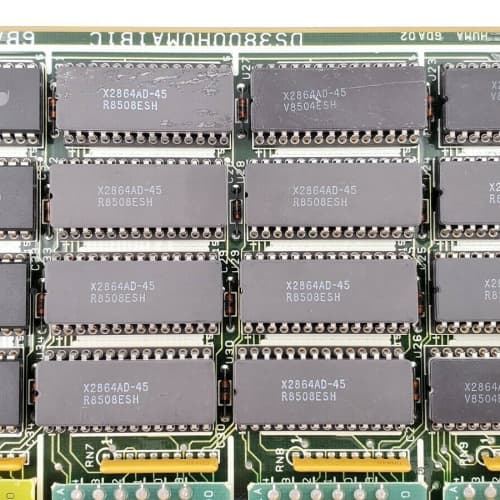
Description
Parameters
-
Input Type: 24V DC discrete (sourcing/sinking, configurable)
-
Output Type: 24V DC discrete (transistor, 0.5A per channel)
-
Input Channels: 4 channels (configurable)
-
Output Channels: 12 channels (configurable)
-
Input Voltage: 24V DC (nominal), 10–30V DC range
-
Input Current: 5mA per channel (typical)
-
Output Rating: 24V DC @ 0.5A per channel (short-circuit protected)
-
Response Time: <1ms (inputs) / <2ms (outputs)
-
Isolation: 2500V RMS optical isolation (channel-to-backplane)
-
Power: +5V DC @ 0.8A, +24V DC @ 0.35A (higher due to more output channels)
-
Filtering: Programmable input debounce filter (configurable)
-
Coating: Basic conformal coating (suffix B) – single-layer acrylic
-
Temp Range: 0°C to +60°C
-
Mounting: 6U VME Eurocard, single-slot
-
Diagnostics: LED status per channel (input/output), short-circuit protection, and open-wire detection
Advantages & Features
-
Output-heavy hybrid I/O – 12 outputs + 4 inputs on a single board, providing more actuation channels than HLCA (8 in/8 out)
-
High-speed response (<1ms input, <2ms output) captures and actuates fast-changing digital signals for turbine protection
-
Flexible input configuration – channels can be set as sourcing or sinking via jumpers
-
Short-circuit protected outputs prevent damage from field wiring faults
-
Isolated channels protect the backplane from field wiring faults and surges
-
Basic B-grade coating provides light moisture and dust protection for indoor installations
-
Front-panel LEDs for per-channel status, fault, and output state indication
-
Compatible with Mark IV backplanes and some VIe systems (with adapter)
Application Cases
-
Multi-actuator control systems – controlling multiple turbine valves (fuel, steam, bypass) with fewer feedback inputs
-
Overspeed protection with multiple trip outputs – high-speed inputs with multiple redundant trip actuator outputs
-
Flame detection and burner management – digital signals from flame scanners with multiple output channels for fuel and purge valves
-
Valve position control – limit switch inputs with multiple solenoid valve outputs
-
Retrofit projects replacing separate input and output boards where more outputs than inputs are needed
Competitor Comparison
-
vs. DS3800HLCA (A variant): More outputs (12 vs. 8) but fewer inputs (4 vs. 8) – HLCB is output-heavy, HLCA is balanced I/O
-
vs. DS3800HL0A1EC (input-only high-speed): HLCB offers both inputs and outputs (4 in/12 out) vs. input-only (16 in) – HLCB provides hybrid I/O but fewer total inputs
-
vs. DS3800HHRB1D1D (standard discrete I/O): HLCB offers faster response (<1ms vs. 3ms) and higher output density – significant upgrade for high-speed actuation
-
vs. DS3800HHTB1D1D (relay output board): HLCB offers transistor outputs (faster) vs. relay outputs (slower) – better for high-speed actuation
-
vs. DS3800HOMB (analog output): HLCB is for discrete (digital) signals, HOMB is for analog signals
-
vs. ABB DSDI series: Similar high-speed discrete capability, but GE offers better Mark IV integration
-
vs. Siemens 6ES7 series: Similar functionality, but GE offers specialized high-speed hybrid I/O with output-heavy configuration
-
vs. Woodward 5437 modules: GE offers faster response and hybrid I/O in a single board
Selection Suggestions
-
Critical: Confirm input type (sourcing vs. sinking) – jumper settings must match your field devices
-
Critical: Confirm output load current – do not exceed 0.5A per output channel
-
Verify your backplane provides both +5V and +24V field power with sufficient current capacity (+24V @ 0.35A)
-
Assess channel mix – this board is ideal for applications requiring more actuator outputs (12) than sensor inputs (4)
-
Evaluate environmental conditions – B coating is suitable for clean, dry indoor installations; upgrade to C/D/G/H if needed
-
Order mating front connector (p/n may vary – confirm with GE)
-
For critical protection applications, consider used/refurbished units with 90-day warranty
Precautions
-
Critical: Do not exceed 30V DC on input or output channels – overvoltage may damage the isolation circuits
-
Critical: Do not short-circuit output channels – outputs are protected but prolonged shorts may cause damage
-
Critical: High-speed inputs are sensitive to noise – use shielded twisted-pair cables and proper grounding to avoid false triggers
-
Ensure field power supply (+24V DC) is stable and within 10–30V DC range
-
Programmable debounce filtering must be set correctly – too long a delay may miss critical events; too short may cause false triggers
-
Basic B coating does not protect against humidity or corrosive gases – upgrade to C/D/G/H if your environment has moisture or chemicals
-
Allow 30-minute warm-up before commissioning
-
Store in ESD-safe packaging – edge connector is static-sensitive
-
Periodically verify input and output operation every year (high-speed protection circuits require regular testing)
-
Do not hot-swap – Mark IV backplanes require power-off for insertion/removal
-
If replacing separate input and output boards, verify wiring and pinout compatibility – HLCB may differ from HLCA or standard discrete series in pin assignments
phoenix QUINT-PS-100-240AC/24DC/10-2938604
OMRON CJ2M CPU12
.jpg)


Reviews
There are no reviews yet.