
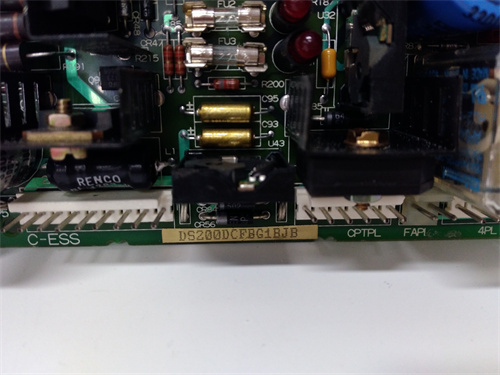
Description
Key Technical Parameters
| Parameter | Specification |
|---|---|
| Brand | GE / Emerson |
| Model | IS210MVRCH1AA |
| Vibration Input Channels | 8 channels, configurable for proximity probes, velocity sensors, or accelerometers |
| Input Types | Proximity probes (eddy current), velocity sensors, accelerometers (IEPE/charge) |
| Measurement Range | Displacement: 0–500 µm (peak-peak), Velocity: 0–100 mm/s (RMS), Acceleration: 0–50 g (peak) |
| Frequency Range | 10 Hz – 10 kHz (configurable) |
| Alarm/Trip Levels | 2 x programmable alarm levels per channel (Alert/Danger) |
| Data Recording | Non-volatile flash memory (up to 8 GB) |
| Recording Channels | 8 vibration signals + 4 auxiliary analog signals |
| Communication | Fiber-optic (Mark V backplane) + 2 x 10/100/1000 Mbps Ethernet |
| Communication Protocols | GE SRTP, Modbus RTU, Modbus TCP, OPC UA (server) |
| Diagnostics | Sensor health monitoring, open/short detection, signal quality assessment, self-test routines |
| Protection | Overvoltage, reverse polarity, short-circuit, sensor fault detection |
| Cooling | Passive – no fan |
| Dimensions | 260 × 180 × 35 mm (standard Mark V Eurocard) |
| Operating Temp | 0°C to +60°C |
| Certifications | CE, UL, CSA, API 670 compliant |
Advantages & Features
-
Dedicated Vibration Monitoring – The IS210MVRCH1AA provides 8 channels of continuous vibration monitoring with dedicated signal conditioning and analysis for each channel.
-
Multi-Sensor Support – Compatible with proximity probes (eddy current), velocity sensors, and accelerometers, covering a wide range of vibration measurement applications.
-
Programmable Alarm/Trip Levels – Two independent alarm levels per channel (Alert and Danger) with customizable thresholds and time delays.
-
Data Recording – Up to 8 GB non-volatile flash memory for continuous data recording and event capture.
-
High-Speed Recording – Configurable recording rates for trend analysis and transient capture.
-
Sensor Fault Detection – Continuously monitors sensor health, detecting open circuits, short circuits, and signal degradation.
-
API 670 Compliance – Meets or exceeds API 670 (Machinery Protection Systems) requirements for vibration monitoring and protection.
-
Dual Ethernet – Two Gigabit Ethernet ports support redundant communication and data export.
-
OPC UA Support – OPC UA server enables secure data access for enterprise-level integration.
-
Fibre-Optic Backplane – Interfaces with the Mark V controller via high-speed fiber-optic backplane, ensuring noise-immune data transmission.
-
Hot-Swap Capable – Supports live insertion/removal with safety interlocks, minimizing downtime.
-
High Reliability – Military-grade components, conformal-coated PCB, and robust design with MTBF of 90,000 hours.
Application Cases
-
Bearing Vibration Monitoring – Monitors turbine bearing vibration using proximity probes to detect shaft displacement and dynamic motion.
-
Shaft Relative Position – Measures shaft position relative to bearings for thrust position and radial runout monitoring.
-
Compressor Surge Detection – Detects incipient surge conditions via increased vibration levels.
-
Predictive Maintenance – Provides continuous vibration data with recording for trending analysis, enabling predictive maintenance scheduling.
-
API 670 Compliant Systems – Used in applications requiring compliance with API 670 machinery protection standards.
-
Overspeed Protection Integration – Provides trip signals to the Mark V controller for overspeed protection logic.
Comparison with Competitor Products
| Feature | GE IS210MVRCH1AA | GE IS210MVRCH2 | Bently Nevada 3500/40M | Vibro-Meter VM600 |
|---|---|---|---|---|
| Vibration Channels | 8 | 4 | 4 | 6 |
| Sensor Types | Proximity, Velocity, Accelerometer | Proximity, Velocity | Proximity, Velocity, Accelerometer | Proximity, Velocity, Accelerometer |
| Frequency Range | 10 Hz – 10 kHz | 10 Hz – 10 kHz | 1 Hz – 10 kHz | 10 Hz – 10 kHz |
| Alarm/Trip Levels | 2 per channel | 2 per channel | 2 per channel | 2 per channel |
| Data Recording | Yes (8 GB) | Yes (4 GB) | Yes (external) | Yes (external) |
| Dual Ethernet | Yes (Gigabit) | Yes (Gigabit) | No | No |
| OPC UA | Yes | No | No | No |
| API 670 Compliant | Yes | Yes | Yes | Yes |
| Hot-Swap | Yes | Yes | Yes | No |
| MTBF | 90,000 hrs | 95,000 hrs | 95,000 hrs | 85,000 hrs |
Key Differentiator: The IS210MVRCH1AA offers the highest channel count (8), integrated data recording (8 GB), dual Gigabit Ethernet with OPC UA support, and API 670 compliance, making it a comprehensive vibration monitoring solution for GE Mark V systems.
Selection Suggestions
-
Evaluate Vibration Monitoring Needs – The IS210MVRCH1AA provides 8 channels, typically sufficient for most turbine applications. For smaller needs, consider the MVRCH2 (4 channels).
-
Identify Sensor Types – Verify that the module’s configurable inputs support your specific sensors.
-
Determine Frequency Range – Ensure the module’s 10 Hz – 10 kHz range covers the critical frequencies of your turbine.
-
Configure Alarm/Trip Levels – Set Alert and Danger levels per channel based on turbine OEM recommendations.
-
Data Recording – Configure recording rates and storage allocation for trending and event analysis.
-
Check API 670 Requirements – The IS210MVRCH1AA meets API 670 standards; verify compliance for your application.
-
Communication Requirements – Dual Ethernet with OPC UA supports plant integration and IIoT connectivity.
-
Firmware – The “H1AA” suffix indicates a specific firmware version; verify compatibility with your Mark V system.
-
Spares – Lead time typically 8–12 weeks; maintain a spare module for critical installations.
Precautions
-
ESD Protection – Use wrist strap and anti-static handling during installation.
-
Sensor Wiring – Use dedicated shielded cables for vibration sensors; ground shields at the module end only. For proximity probes, observe correct probe cable length and extension cable requirements.
-
Probe Gap Setting – For proximity probes, verify initial gap voltage (typically -10 V) and adjust before commissioning.
-
Sensor Polarity – Observe correct polarity for velocity sensors and accelerometers.
-
Grounding – Connect earth lug directly to system ground with 6 mm² wire; avoid ground loops. For proximity probes, ensure proper grounding.
-
Data Backup – Regularly back up recorded vibration data to external storage.
-
Commissioning – Test each vibration channel with a known signal source before commissioning; verify alarm and trip logic with simulated signals.
-
Firmware Updates – Use only GE’s official tool for firmware updates.
-
Periodic Inspection – Check for dust accumulation on heatsink and connector integrity annually; clean as needed.
Summary
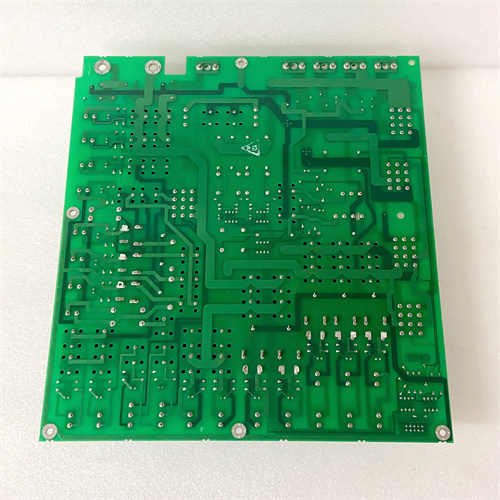
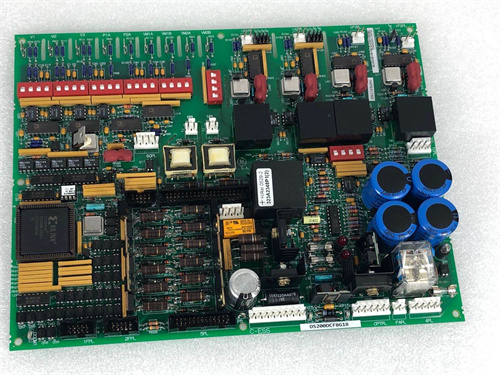
The IS210MVRCH1AA is a comprehensive, high-performance vibration monitoring and recording module for GE Speedtronic Mark V turbine control systems, providing 8 channels of continuous vibration monitoring with integrated data recording. Its key strengths include 8 configurable input channels (proximity, velocity, accelerometer), 10 Hz – 10 kHz frequency range, 2 programmable alarm/trip levels per channel, 8 GB data recording, dual Gigabit Ethernet with OPC UA support, sensor fault detection, API 670 compliance, fiber-optic backplane, hot-swap capability, and MTBF of 90,000 hours. Ideal for bearing vibration monitoring, shaft position monitoring, compressor surge detection, predictive maintenance, and API 670 compliant systems, it provides comprehensive vibration monitoring with data recording for Mark V systems. When paired with appropriate I/O modules and properly maintained, the IS210MVRCH1AA delivers reliable vibration monitoring and recording service for decades.
WESTINGHOUSE 1C31227G01
YOKOGAWA ADV551-P50
WESTINGHOUSE 1C31224G01
Schneider 140ACI04000


Reviews
There are no reviews yet.