
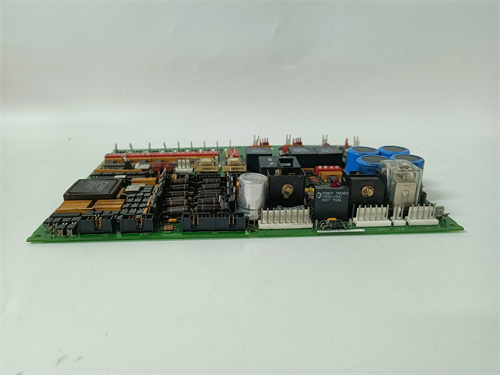
Description
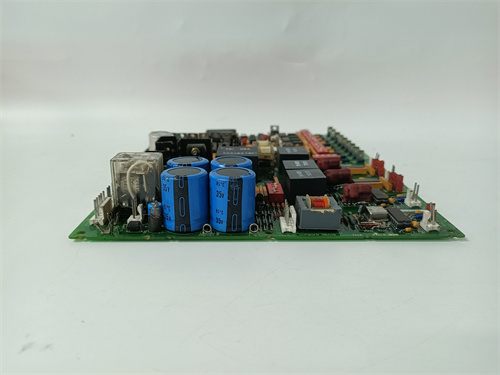
Product Parameters
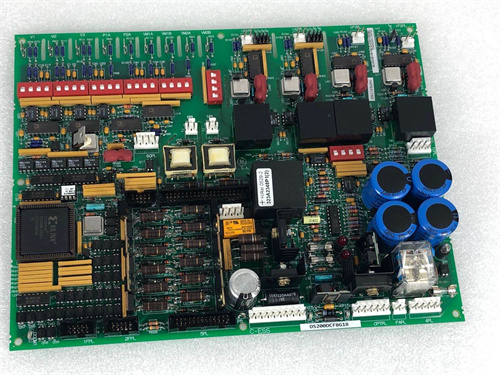
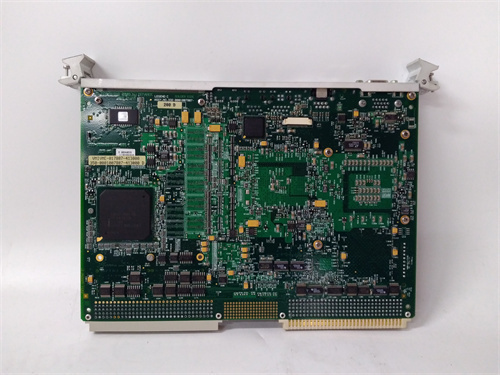
Manufacturer & Series: General Electric (GE), Speedtronic Mark VIe series. Part Number: GE Mark VIe DS200ADPAG1A (the “A” suffix denotes enhanced EMC filtering, extended temperature, and improved diagnostics). Power Supply: +5 VDC (logic) and ±15 VDC (analog circuitry) drawn from the Mark VIe VME64x backplane. Channel Configuration: 16 single-ended or 8 differential analog input channels, software-configurable via ToolboxST. Input Range: Software-selectable: ±10 V, ±5 V, 0-10 V, 0-5 V, or ±20 mA (with external shunt resistor). Programmable Gain: Per-channel PGA with software-selectable gain settings: 1, 2, 4, 8, 16, 32, 64, 128, 256, 512, 1000. Resolution: 16-bit SAR ADC (effective resolution: up to 15 bits at lower gain settings, 14.5 bits at maximum gain and sampling rate). Sampling Rate: Up to 500 kHz aggregate (16 channels at 31.25 kHz each, or 8 channels at 62.5 kHz each). Input Impedance: >10 MΩ (voltage mode at low gain); >1 MΩ (voltage mode at high gain); 250 Ω (current mode with external shunt). Differential Input Specifications: Common-mode rejection ratio (CMRR): 90 dB typical (improved from 85 dB); common-mode voltage range: ±12 V. Accuracy: ±0.04% of full scale (at gain = 1); ±0.12% of full scale (at gain = 1000, at 25°C); ±0.18% across full temperature range (-40°C to +70°C). Signal-to-Noise Ratio (SNR): 82 dB typical at gain = 1 (improved from 80 dB); 74 dB typical at gain = 1000 (improved from 72 dB). Total Harmonic Distortion (THD): -77 dB typical at gain = 1 (improved from -75 dB); -67 dB typical at gain = 1000 (improved from -65 dB). FIFO Buffer: 2 KB onboard FIFO for high-speed data buffering. Isolation: 2500 Vrms per-channel galvanic isolation between analog inputs and backplane logic. Input Protection: Overvoltage protection up to ±60 VDC continuous (enhanced) and ESD protection up to 10 kV (contact discharge, improved from 8 kV). Coating: Enhanced conformal coating (thickness 75 µm vs. standard 50 µm) rated for H₂S, salt spray, and high-humidity. Operating Temperature: -40°C to +70°C (extended vs. standard -30°C to +65°C). Diagnostics: Over-range/under-range detection, missing channel detection, internal reference monitoring, ADC temperature monitoring, advanced PGA saturation detection with automatic gain adjustment suggestions, enhanced isolation integrity monitoring, drift trending analysis, and noise floor analysis. Mounting & Connectivity: Direct VME backplane insertion; front panel features a 68-pin high-density SCSI-style connector with enhanced grounding for EMI shielding.
Advantages & Features
Per-Channel Programmable Gain with Enhanced Accuracy: The defining feature of the GE Mark VIe DS200ADPAG1A is its per-channel PGA with software-selectable gain from 1 to 1000. The “A” revision improves gain accuracy to ±0.04% (gain = 1) and ±0.12% (gain = 1000)—a 20% improvement over the base G1 variant. This allows the board to directly interface with low-level sensors such as thermocouples, strain gauges, and accelerometers without external signal conditioning, simplifying wiring and eliminating failure points. Enhanced CMRR and Noise Rejection: The “A” revision provides 90 dB CMRR and 82 dB SNR (gain = 1)—improvements over the base G1 variant (85 dB, 80 dB)—ensuring superior signal integrity in high-EMI environments such as power plants with VFDs, radar, or radio transmitters. Extended Temperature Range and Enhanced Coating: Rated for -40°C to +70°C with enhanced conformal coating (75 µm), the GE Mark VIe DS200ADPAG1A is specifically designed for demanding environments: arctic installations, desert solar-thermal plants, offshore platforms, and H₂S-rich geothermal applications. Superior Per-Channel Galvanic Isolation: The GE Mark VIe DS200ADPAG1A provides 2500 Vrms per-channel isolation, protecting the control system from high-voltage faults and eliminating ground-loop issues—essential for generator monitoring, high-voltage environments, and safety-critical systems. Enhanced Input Protection: With ±60 VDC overvoltage protection and 10 kV ESD rating, the GE Mark VIe DS200ADPAG1A provides exceptional resilience against wiring errors, lightning-induced transients, and electrostatic discharge—reducing field failure rates significantly. Advanced PGA Saturation Detection: A unique enhanced diagnostic feature in the “A” revision, this continuously monitors each channel’s PGA for saturation conditions and provides automatic gain adjustment suggestions via ToolboxST. This enables real-time gain optimization to prevent signal clipping and maximize dynamic range. Enhanced Isolation Integrity Monitoring: The “A” revision features improved isolation integrity monitoring with more sensitive leakage detection, providing earlier warning of insulation degradation—critical for safety-related applications. High-Speed Data Acquisition: With aggregate sampling rates up to 500 kHz, the GE Mark VIe DS200ADPAG1A captures high-frequency transient events such as turbine blade-passing vibrations, startup speed ramps, and rapid load changes. Flexible Configuration: The board supports both single-ended (16 channels) and differential (8 channels) modes. Differential mode offers superior noise rejection for long cable runs, while single-ended mode maximizes channel density. Onboard FIFO Buffering: The 2 KB FIFO buffer ensures continuous data acquisition even during bus contention. Seamless VME Integration: The board connects directly to the VME backplane, providing deterministic, zero-latency data transfer. Backward Compatibility: The board is pin-compatible with older Mark V analog boards and the base G1 variant, allowing easy field upgrades without modifying termination panels.
Application Cases
Gas Turbine – Direct Thermocouple and Vibration Monitoring in Harsh Environment: A 9FA gas turbine in a desert environment used the GE Mark VIe DS200ADPAG1A for direct monitoring of 8 thermocouple signals (Type K, millivolt-level) with gain = 100, and 8 vibration accelerometers (low-level AC signals) with gain = 500. The -40°C to +70°C rating proved essential when cabinet temperatures reached 68°C during summer. The programmable gain eliminated external signal conditioners, reducing cabinet space by 40%. The enhanced CMRR (90 dB) eliminated noise from nearby VFDs. The advanced PGA saturation detection automatically suggested gain adjustments for two thermocouple channels, optimizing dynamic range. The enhanced isolation integrity monitoring detected a gradual decrease in isolation resistance on one accelerometer channel, traced to cable degradation—replaced before failure. Steam Turbine – Mixed Signal Monitoring in Arctic Installation: A combined-cycle plant in an arctic region implemented the GE Mark VIe DS200ADPAG1A for monitoring 16 mixed signals: 4 thermocouple inputs (millivolt, gain = 100), 4 strain gauge inputs (microvolt, gain = 1000), 4 4-20 mA inputs (gain = 1 with external shunt), and 4 0-10 V inputs (gain = 1). The -40°C rating enabled reliable cold startup during winter conditions. The per-channel gain flexibility allowed a single board to handle all signal types. The 2500 Vrms isolation ensured ground-fault protection for the turbine’s high-voltage electro-hydraulic system. LNG Compressor – Offshore Platform Accelerometer and Pressure Monitoring: An offshore LNG facility installed the GE Mark VIe DS200ADPAG1A on a centrifugal compressor with 8 accelerometers (gain = 500 for vibration monitoring) and 8 pressure transmitters (gain = 1 with 4-20 mA shunt). The enhanced conformal coating (75 µm) withstood the salt spray and high humidity typical of offshore environments. The advanced PGA saturation detection flagged one accelerometer channel where vibration amplitude had increased significantly (approaching clipping), alerting operators to a developing bearing issue—enabling scheduled maintenance before catastrophic failure. Hydroelectric Plant – Strain Gauge and RTD Monitoring: A large hydroelectric facility used the GE Mark VIe DS200ADPAG1A to monitor strain gauges on turbine blades (8 channels, gain = 1000 for microvolt-level signals) and RTD inputs with external transmitters (8 channels, gain = 1 for 4-20 mA). The enhanced EMC filtering ensured accurate readings despite strong magnetic fields and harmonics in the generator hall. The enhanced isolation integrity monitoring provided documented compliance with safety regulations.
Comparison with Competitors
vs. Siemens Simatic ET 200SP HA Analog Module with Programmable Gain and Extended Temperature: Siemens offers programmable gain modules but typically with limited range (1-100), lower CMRR (80 dB), and limited temperature range (-25°C to +60°C). The GE Mark VIe DS200ADPAG1A provides wider gain range (1-1000), higher CMRR (90 dB), extended temperature range (-40°C to +70°C), higher isolation (2500 Vrms vs. 1500 Vrms), and advanced features (PGA saturation detection, enhanced isolation monitoring)—superior for harsh environments and low-level signal applications. vs. ABB S800 Analog Input Module with Programmable Gain and Extended Temperature: ABB offers gain selection but typically channel-group (not per-channel), lower maximum gain (1-100), and limited temperature range. The GE Mark VIe DS200ADPAG1A provides per-channel gain up to 1000, higher isolation (2500 Vrms vs. 2000 Vrms), higher sampling rates (500 kHz vs. 200 kHz), extended temperature range (-40°C to +70°C), and advanced diagnostics. vs. National Instruments cDAQ with Programmable Gain and Extended Temperature: NI offers excellent programmable gain data acquisition but is designed for test and measurement, not continuous turbine control. The GE Mark VIe DS200ADPAG1A integrates directly with the Mark VIe real-time control environment with zero-latency VME access, whereas NI systems require external communication with latency unsuitable for control loops. vs. GE Mark V Equivalent (DS200ADPAG1A – older generation): The GE Mark VIe DS200ADPAG1A offers substantial improvements: 500 kHz aggregate vs. 250 kHz, 16-bit SAR vs. 14-bit, 2500 Vrms isolation vs. 2000 Vrms, -40°C to +70°C vs. 0°C to +55°C, 90 dB CMRR vs. 80 dB, 75 µm coating vs. 50 µm, advanced PGA saturation detection vs. basic, enhanced isolation monitoring vs. none, and ±60 VDC protection vs. ±40 VDC.
Selection Suggestions
Evaluate Programmable Gain and Environmental Requirements: If your application involves low-level sensors (thermocouples, strain gauges, accelerometers) requiring gain above 100, and operates in harsh environments (extreme temperatures, high-EMI, corrosive atmospheres), the GE Mark VIe DS200ADPAG1A with extended temperature range, enhanced coating, and 90 dB CMRR is the optimal choice. For climate-controlled environments with standard gain requirements, the base G1 variant may suffice. Assess Channel Count vs. Signal Types: If you need to handle a mix of signal types across up to 16 channels, the GE Mark VIe DS200ADPAG1A with per-channel gain is ideal. If more than 16 channels are required without gain, consider the ADMAH1 series. Consider Isolation and Safety Requirements: If your application requires high isolation (2500 Vrms) with safety-related monitoring, the enhanced isolation integrity monitoring on the GE Mark VIe DS200ADPAG1A provides superior diagnostic capability compared to the base G1 variant. Evaluate Sampling Rate vs. Gain: The effective resolution decreases at higher gain settings and higher sampling rates. For maximum resolution at high gain (>100), consider reducing the sampling rate to improve effective resolution. Check System Compatibility: The GE Mark VIe DS200ADPAG1A requires ToolboxST software v5.5 or later to access advanced features (PGA saturation detection, enhanced isolation monitoring). The board is physically compatible with all Mark VIe racks. Spare Parts Strategy: The GE Mark VIe DS200ADPAG1A is a specialized board with typical lead times of 6-10 weeks. For critical harsh-environment applications, maintain at least one spare board per system.
Precautions
ESD Protection: The GE Mark VIe DS200ADPAG1A contains sensitive 16-bit SAR ADC, PGA components, and precision analog devices. Despite 10 kV ESD protection, always use ESD precautions during handling. No Hot-Swapping: This board is strictly non-hot-swappable. Always de-energize the entire Mark VIe rack before insertion or removal. Gain Selection and Signal Scaling: Carefully select the gain to prevent PGA saturation. The ±10 V input range at gain = 1 accommodates signals up to ±10 V. At gain = 1000, the input range is reduced to ±10 mV—signals exceeding this will saturate. Use the advanced PGA saturation detection diagnostic to verify gain settings during commissioning. Isolation Voltage Limits: Do not exceed 2500 Vrms per-channel isolation—higher voltage faults can cause isolation breakdown. The enhanced isolation integrity monitoring will indicate degradation before catastrophic failure. Wiring Practices for Low-Level Signals: For low-level signals (microvolt and millivolt ranges), use shielded twisted-pair cables with shields grounded at the sensor end only. Keep cable lengths as short as practical. Avoid routing near high-power equipment or VFDs. Input Range and Gain Trade-offs: Effective resolution and SNR decrease at higher gain settings. Select the lowest gain that still maximizes the ADC’s input range. For example, a ±100 mV signal should use gain = 10 (to produce ±1 V at the ADC), not gain = 100 (which would produce ±10 V but with higher noise). PGA Saturation Detection: Periodically review the PGA saturation diagnostic reports. If saturation is detected or the advanced algorithm suggests adjustment, reduce the gain for that channel via software. Ignoring saturation will result in clipped signals and erroneous measurements. Signal Cable Shielding: Use properly shielded twisted-pair cables with shields grounded at the sensor end only (single-point grounding) to maintain isolation integrity. Grounding at both ends can create ground loops that stress the isolation barrier. Loop Power Supply: The GE Mark VIe DS200ADPAG1A does not provide loop power for 4-20 mA transmitters. Use an isolated 24 VDC power supply with appropriate shunt resistors. FIFO Overflow Prevention: Ensure the main processor polls the board frequently enough to prevent FIFO overflow during continuous 500 kHz acquisition. Configuration Backup: Before replacing a faulty unit, export gain and channel configuration via ToolboxST. New boards ship with factory-default settings (gain = 1). Storage Conditions: Store uninstalled boards in original anti-static bags within 10°C to 35°C and humidity below 50%. Firmware Compatibility: Verify firmware revision matches the main processor. The “A” variant requires specific firmware (typically v5.5 or later). Coordinate with GE field service for alignment. Calibration Cycle: GE recommends external calibration every 24 months. For critical applications, consider annual calibration. Gain accuracy should be verified at multiple gain settings. Temperature Cycling: Although rated for -40°C to +70°C, avoid rapid temperature changes (>5°C per minute) that can cause condensation and thermal stress, potentially affecting gain accuracy. Channel-to-Channel Leakage: With high-impedance inputs (>10 MΩ at low gain), ensure the termination panel and cables are clean and dry to prevent leakage. High humidity or contamination can create leakage paths, particularly at high gain settings. Data Bus Bandwidth: The data rate of 500 kHz aggregate (approximately 1 MB/s for 16 channels at 16 bits) places demands on the VME bus. Ensure adequate bus bandwidth before deploying multiple boards. Coating Integrity: The enhanced conformal coating is robust but can be damaged by abrasive cleaning or sharp tools. Use only approved cleaning agents and avoid scratching. Regulatory Compliance: For nuclear safety-related, medical, or offshore applications, maintain documentation of the GE Mark VIe DS200ADPAG1A isolation ratings, coating certification, and diagnostic records as part of regulatory compliance files.
ABB DSAB-01C
Fisher DVC2000
A-B 1756-IT16

Reviews
There are no reviews yet.