
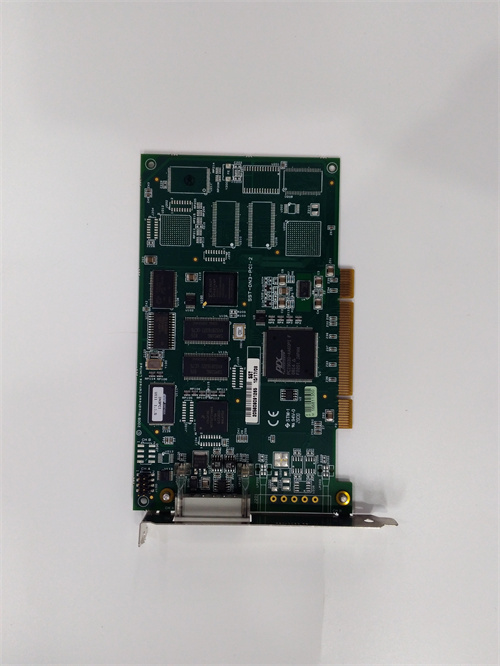
Description
Product Description
The ABB DSQC 266G is a high-performance I/O (Input/Output) communication board designed for use with ABB’s IRC5 and earlier S4C+ robot controller platforms. This board serves as the primary interface between the robot controller and external field devices, providing isolated digital inputs and outputs for applications such as gripper control, conveyor tracking, safety interlocks, and peripheral equipment coordination. As an integral component within the ABB robotics ecosystem, the ABB DSQC 266G enables seamless integration of the robot into automated production cells, offering reliable signal processing and robust electrical isolation. It is recognized as a standard OEM replacement part for maintaining and upgrading ABB robotic systems in manufacturing environments.
Product Parameters
-
Model: ABB DSQC 266G
-
Type: Digital I/O Communication Board / DeviceNet Adapter Module
-
I/O Channels: Typically 16 digital inputs and 16 digital outputs (isolated)
-
Input Voltage: 24V DC (sink/source configurable)
-
Output Rating: 0.5A per channel (typical), with grouped common connections
-
Communication Protocol: DeviceNet slave interface, integrated directly on board
-
Isolation: Opto-isolated inputs and outputs; electrical isolation between field side and controller logic
-
Mounting: Designed to mount within the ABB robot controller cabinet (IRC5 or S4C+) or in remote I/O cabinets with appropriate backplane
-
Status Indication: On-board LED indicators for power, network status, and individual I/O channel states
-
Connector Type: Industrial terminal blocks for field wiring; DeviceNet connector for network communication
Advantages and Features
The ABB DSQC 266G offers several technical advantages that make it a preferred choice for robotic system integration:
-
Integrated DeviceNet Interface: Unlike generic I/O modules that require separate communication adapters, the ABB DSQC 266G incorporates a DeviceNet slave interface directly on the board. This allows the robot controller to address I/O points natively through the DeviceNet network without additional gateway hardware, simplifying system architecture and reducing component count.
-
Opto-Isolated I/O: All inputs and outputs on the ABB DSQC 266G are optically isolated from the controller logic, protecting the sensitive robot controller electronics from electrical noise, voltage spikes, and ground loops commonly encountered in industrial welding, stamping, and material handling applications.
-
Diagnostic Visibility: The board provides extensive diagnostic feedback through both onboard LEDs and network-accessible status registers. This enables rapid troubleshooting of field wiring issues, short circuits, or communication faults without requiring external test equipment.
-
Flexible I/O Configuration: The digital inputs on the ABB DSQC 266G can be configured as sink or source (PNP/NPN), accommodating a wide range of sensor types commonly used in automation. This flexibility reduces the need for intermediate relays or signal converters.
-
Robust Construction: Built to ABB’s industrial specifications, the ABB DSQC 266G features reinforced terminal blocks, conformal coating on the PCB, and components rated for extended temperature ranges, ensuring reliable operation in harsh manufacturing environments.
Application Cases
The ABB DSQC 266G is widely deployed across industries where robotic automation requires extensive peripheral integration:
-
Automotive Manufacturing: Used in ABB IRC5-controlled robots performing spot welding, painting, and assembly operations. The ABB DSQC 266G interfaces with weld gun sensors, part present detectors, and safety light curtains, ensuring coordinated operation within high-volume production lines.
-
Material Handling & Palletizing: Deployed in robotic palletizing cells where the ABB DSQC 266G communicates with conveyor photo-eyes, stretch wrap machines, and pallet dispenser sensors. The isolated outputs drive pneumatic grippers and suction cups for end-of-arm tooling control.
-
Plastics & Injection Molding: Found in robotic take-out systems interfacing with injection molding machines. The ABB DSQC 266G exchanges signals for mold open/close confirmation, part ejection triggers, and safety gate interlocks, enabling synchronized robotic part removal.
-
Food & Beverage Packaging: Installed in ABB robots used for case packing and carton loading. The ABB DSQC 266G handles communication with fill level sensors, reject diverters, and packaging material feeders, maintaining hygienic operation with reliable signal integrity.
Comparison with Competing Products
When compared to third-party I/O modules or newer I/O platforms, the ABB DSQC 266G maintains distinct advantages within its application context:
-
Native Integration: Competitor I/O modules, such as generic DeviceNet slaves from third-party manufacturers, require manual configuration of EDS files and may not support the specific handshaking protocols expected by ABB Rapid programming language. The ABB DSQC 266G is recognized natively by the IRC5 controller, allowing direct I/O mapping without complex network configuration.
-
Diagnostic Depth: While third-party modules typically offer basic network status and power indicators, the ABB DSQC 266G provides detailed channel-level diagnostics accessible through the robot’s teach pendant. This integration allows operators to monitor I/O status directly from the robot interface, reducing time spent troubleshooting external wiring.
-
Mechanical Robustness: Commercial I/O modules often use removable terminal blocks that can loosen over time due to vibration. The ABB DSQC 266G features screw-clamp terminals with robust retention, designed to withstand the high-vibration environments encountered in robotic applications such as press tending and heavy material handling.
-
Lifecycle Support: As an OEM component, the ABB DSQC 266G is supported through ABB’s global service network. Facilities operating critical robotic cells can obtain verified replacement parts with documented traceability, a requirement for industries with strict quality management standards such as aerospace and medical device manufacturing.
Selection Suggestions and Precautions
When selecting and installing the ABB DSQC 266G, consider the following guidelines:
-
Verify Controller Compatibility: The ABB DSQC 266G is designed for ABB IRC5 and S4C+ robot controllers. Confirm that your controller firmware version supports this specific I/O board. For newer OmniCore controllers, alternative I/O solutions may be required.
-
Check DeviceNet Network Configuration: The ABB DSQC 266G operates as a DeviceNet slave. Ensure that the network baud rate and node address are correctly set, typically via DIP switches on the board. Address conflicts or mismatched baud rates will prevent communication with the robot controller.
-
Confirm I/O Voltage Requirements: The inputs on the ABB DSQC 266G are designed for 24V DC signals. Applying higher voltages, such as 110V AC, will damage the opto-isolation circuits. Verify that all field devices match the input voltage specification.
-
Output Load Management: Each output channel on the ABB DSQC 266G is rated for 0.5A maximum. For loads exceeding this rating, such as large pneumatic valves or contactors, use external interposing relays to protect the board from overcurrent damage. Inductive loads should be fitted with flyback diodes to prevent voltage spikes.
-
ESD and Handling Precautions: Handle the ABB DSQC 266G with proper electrostatic discharge (ESD) protection. Use a grounded wrist strap and work on an ESD-safe surface to prevent latent damage to semiconductor components during installation or replacement.
-
Inspect Before Installation: Prior to mounting, visually inspect the ABB DSQC 266G for any signs of physical damage, corrosion, or burnt components. For replacement applications, verify that the board revision is compatible with the existing system configuration.
-
Proper Grounding: Ensure that the system grounding scheme follows ABB specifications. Improper grounding can lead to ground loops, which may cause erratic I/O behavior or damage the ABB DSQC 266G despite its isolation features.
TGT-S00N-1-1-CA DCS
TGT-000A-4-0-AA DCS
TGT-AIOV-8-0-BC PLC
TGT-3X6L-1-0-BD DCS
78004654B DCS




Reviews
There are no reviews yet.