
Description
Product Overview
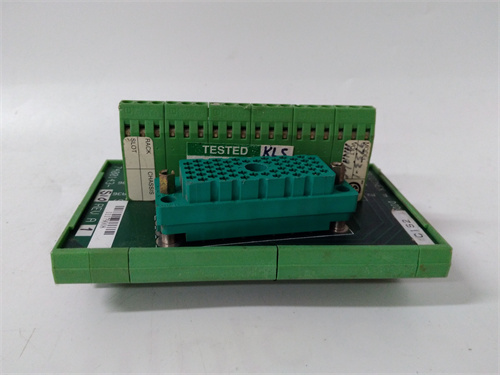
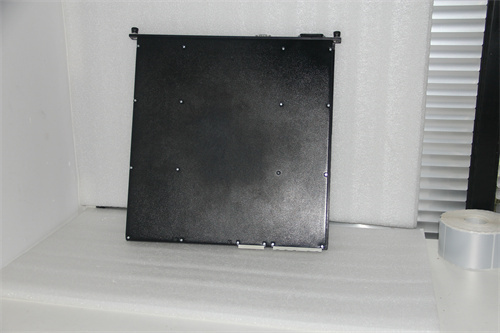
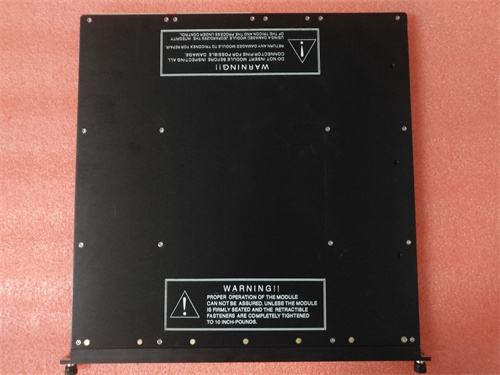
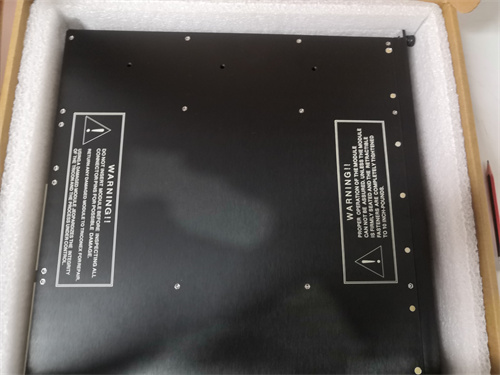
The TRICONEX 9761-210 is a critical digital output module for the Triconex Tricon safety instrumented system (SIS), now part of the Schneider Electric portfolio. This module is designed to provide ultra-reliable, fail-safe output control for critical field devices such as solenoid valves, motor starters, and alarm annunciators in safety applications. Engineered with Triple Modular Redundant (TMR) architecture, the TRICONEX 9761-210 ensures that safety shutdown commands are executed with the highest level of integrity and availability, even in the presence of a hardware fault.
Key Product Parameters
-
Product Type: TMR Digital Output Module (High-Density)
-
Compatible System: Triconex Tricon V9/V10 Safety System
-
Part Number: 9761-210 (typically indicating a specific channel count and configuration)
-
Output Type: Sourced current, typically 24 VDC.
-
Channels: High-density module, commonly providing 32 channels.
-
TMR Architecture: Each output channel is controlled by three independent circuits that vote on the output state. This provides fault tolerance and diagnostic capability.
-
Output Rating: Each channel is rated for a specific current (e.g., 0.5A or 2A) at 24-30 VDC, suitable for driving solenoids, pilot lights, and small relays directly.
-
Diagnostics: Extensive onboard diagnostics monitor the health of each output circuit, detect field wiring faults (short circuits, open circuits), and report any discrepancies between the three internal processors.
-
Fault State: Outputs are designed to de-energize to the safe state (typically 0V) upon detection of any internal fault, loss of power, or a safety command, adhering to the “de-energize to trip” (DET) principle.
-
Communication: Integrates with the Tricon backplane, communicating with the Main Processors.
Advantages and Core Features
The paramount advantage of the TRICONEX 9761-210 is its certified, fault-tolerant design for safety-critical applications. Its TMR architecture ensures that no single point of failure within the module can prevent a safe shutdown, and it can continue to operate safely even with a failed internal channel. The high channel density reduces cabinet space and system cost per point compared to simpler relays or lower-density modules. The module’s comprehensive diagnostics provide a high level of proof testing coverage, which is essential for maintaining the required Safety Integrity Level (SIL 3). The robust design is certified for use in the most demanding industrial environments.
Application Scenarios
This module is deployed in Safety Instrumented Systems (SIS) across high-hazard industries:
-
Oil & Gas: Controlling emergency shutdown (ESD) valves, fire & gas system actuators, and turbine trip solenoids on offshore platforms and refineries.
-
Chemical/Petrochemical: Actuating final elements for reactor overpressure protection, high-temperature trips, and flammable gas detection systems.
-
Power Generation: Operating critical fuel shut-off valves and other safety devices on gas turbines and boiler systems.
-
Pharmaceutical: Managing safety interlocks on reactors and utility systems.
Comparison with Competing Products
The TRICONEX 9761-210 competes with safety-rated digital output modules from other SIS vendors like Honeywell (Safety Manager), Emerson (DeltaV SIS), and HIMA. Its key differentiator is the proven, hardware-based TMR architecture, which is often favored for its simplicity, deterministic response, and high fault tolerance compared to some 1oo2D (one-out-of-two with diagnostics) systems. Compared to using banks of safety relays, the 9761-210 offers vastly superior diagnostics, smaller footprint, easier configuration, and integrated communication for a complete safety loop within the Tricon system.
Selection Guide and Important Notes
Selecting the TRICONEX 9761-210 is part of designing a complete Tricon safety system for a specific Safety Instrumented Function (SIF). It must be specified by a certified safety engineer.
Important Precautions:
-
Safety System Integration: This module cannot function alone. It requires a Tricon chassis, power supply, and Main Processor(s) as part of a certified safety system.
-
Load Compatibility: The connected field device (e.g., solenoid) must be compatible with the module’s output specifications (voltage, current, and especially inrush current). Exceeding ratings can damage the module.
-
Wiring Practices: Follow Triconex’s strict guidelines for wiring separation between SIS and basic process control system (BPCS) cables to maintain integrity. Use the specified terminal blocks.
-
Configuration & Validation: The module’s operation (including fault behavior and voting logic) must be configured within the Tricon engineering software (Tristation 1131). The entire SIF, including the 9761-210, must be rigorously validated after installation.
-
Proof Testing: The installed module and its connected field devices have a mandatory proof test interval defined during the SIF design to reveal dangerous undetected failures.
F-Com01 HIMA
F8627X HIMA PLC
F8650X HIMA DCS
F8652E HIMA



Reviews
There are no reviews yet.