
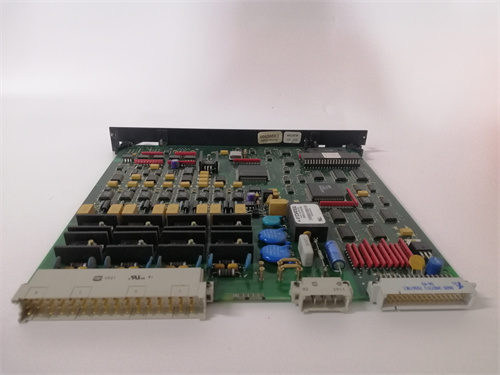
Description
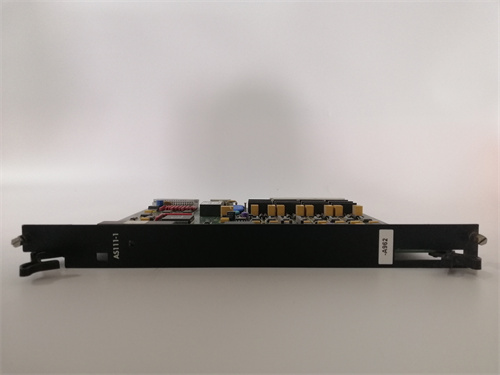
Product Description
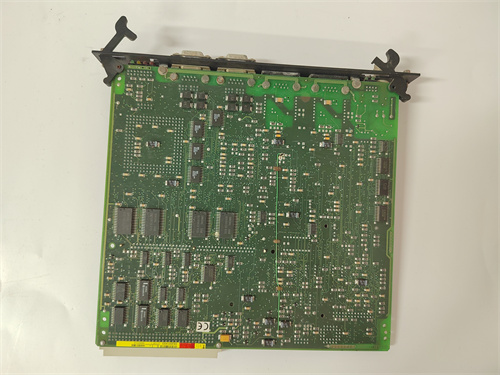
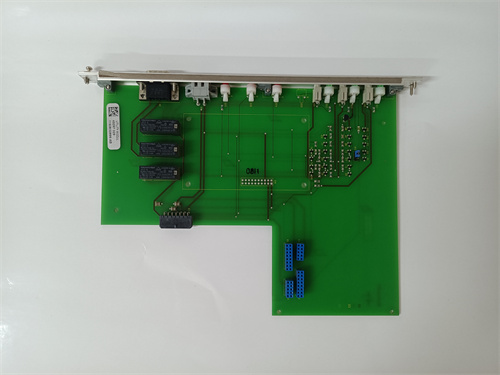
The ALSTOM AS111-1 is a critical relay module from the manufacturer’s extensive range of railway signaling and protection equipment. This module is specifically designed as a high-reliability, fail-safe relay for use in vital safety circuits within railway interlocking and signaling systems. The AS111-1 is engineered to meet the stringent requirements of CENELEC standards (such as EN 50129) for railway applications, where failure can have catastrophic consequences. It functions as a core component for implementing safety logic, such as controlling track circuits, signals, or points (switches) based on the status of other relays or sensors. The robust mechanical design and strict manufacturing tolerances of the ALSTOM AS111-1 ensure consistent, long-term performance in environments subject to vibration, temperature fluctuations, and electromagnetic interference. The reliability of this specific relay is foundational to the safety and availability of railway operations.
Product Parameters
-
Module Type: Vital Safety Relay (Electromechanical Relay)
-
Application Domain: Railway Signaling and Interlocking Systems
-
Contact Configuration: Typically features multiple, physically separated contact sets (e.g., Form C / Changeover contacts) with a specific, verified configuration.
-
Coil Voltage: Designed for standard railway control voltages (e.g., 24V DC, 48V DC, 110V DC). The exact voltage is defined by the model variant.
-
Contact Rating: Rated for switching signaling-level currents and voltages, with specifications for both resistive and inductive loads.
-
Fail-Safe Design: Incorporates principles like gravity drop or forced-guided contacts (positive guidance) to ensure the relay defaults to a known, safe state (typically de-energized) in case of coil power loss or mechanical failure.
-
Safety Certification: Complies with relevant sections of railway standards such as EN 50126 (RAMS), EN 50128 (Software), and EN 50129 (Safety).
-
Mechanical Construction: Durable, often with a transparent or opaque dust cover, and designed for mounting on standard relay racks or DIN rail.
-
Operating Temperature: Rated for a wide temperature range suitable for trackside or signal box installations (e.g., -40°C to +70°C).
-
Vibration/Shock Resistance: Built to withstand the mechanical stresses present in railway environments.
Advantages and Features
-
Proven Safety Integrity: The ALSTOM AS111-1 is designed and certified for use in safety-critical (vital) circuits, providing the highest level of assurance against dangerous failures.
-
Extreme Reliability: The use of high-quality materials, simplified mechanics, and rigorous testing results in a very high mean time between failures (MTBF), which is essential for railway systems with demanding availability requirements.
-
Clear Failure Mode: Its fail-safe design ensures predictable behavior. If a coil wire breaks or power is lost, the relay’s contacts will reliably return to their safe-state position, initiating a restrictive condition (e.g., a red signal).
-
Easy Integration and Diagnostics: The physical design allows for straightforward wiring on terminal racks, and the operational state (energized/de-energized) is often visually apparent. Its simple nature makes troubleshooting easier compared to complex electronic modules.
-
Long Service Life and Maintainability: Electromechanical relays like the AS111-1 have a known wear profile and can be maintained or replaced on a preventative schedule. Spares are readily manageable.
Application Cases in Various Fields
-
Railway Interlocking Systems: Used as a core logic element in relay-based interlockings to enforce safe routes by ensuring points are locked and signals cannot show a proceed aspect unless the route is clear and locked.
-
Track Circuit Control: Employed to control the feed or receiver of an audio-frequency or DC track circuit, changing state to indicate track occupancy to the interlocking logic.
-
Signal Lamp Control: Directly controlling the power to signal lamp aspects (red, yellow, green) based on the output of the vital logic.
-
Level Crossing Protection: Part of the safety logic that lowers barriers and activates lights when a train is detected approaching a crossing.
Comparisons with Competing Products
-
Vs. Programmable Safety Controllers (PES): Compared to solid-state programmable electronic systems (like SIMIS® or Elektriska), the ALSTOM AS111-1 relay offers a simpler, time-tested technology with a transparent failure mode. It is often favored for specific vital functions or in systems where simplicity and provability are paramount. Electronic systems offer more complex logic but require different expertise for verification.
-
Vs. Generic Industrial Relays: Standard industrial relays are not designed to meet the specific “vital” safety standards (CENELEC) or the mechanical endurance requirements of railway signaling. They lack the forced-guided contacts and certified failure mode analysis of the AS111-1.
-
Vs. Other Railway Relay Manufacturers: Competitors include Siemens (Simatic D7), Bombardier (now Alstom), and other specialized suppliers. The ALSTOM AS111-1 is part of a comprehensive, compatible family of components from a major railway systems integrator, ensuring full support and interoperability within Alstom’s signaling solutions.
Selection Suggestions and Precautions
-
Vital vs. Non-Vital: Use the ALSTOM AS111-1 only in circuits classified as vital/safety-critical. Using it for general-purpose control is an unnecessary expense.
-
Exact Specification Matching: Select the exact model variant based on required coil voltage, contact arrangement (e.g., 4 changeover), and contact current rating. Using an incorrect variant can lead to system malfunction.
-
Wiring and Circuit Design: Installation must follow strict railway signaling practices, including the use of segregated wiring, special fusing, and often, redundancy principles (e.g., two relays in series for a vital function). Always follow the system schematic.
-
Preventative Maintenance and Testing: These relays should be included in a regular maintenance schedule involving periodic contact inspection, cleaning, and functional testing to ensure they operate within specified time parameters and contact resistance limits.
-
Environmental Protection: While robust, ensure the relay is installed in an enclosure that protects it from excessive dust, moisture, and contaminants to maximize its operational life.
-
Observe De-Energized State Logic: During design and troubleshooting, always reason from the de-energized (safe) state of the AS111-1. The system logic is typically built to assume a relay failure will result in this state.
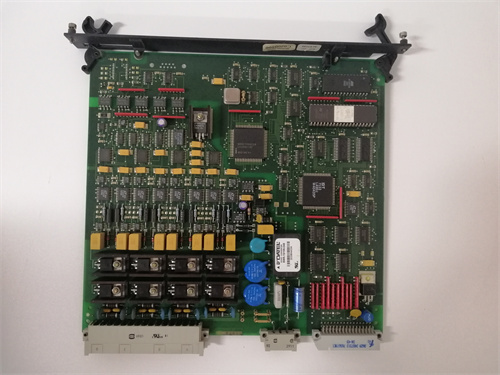
IS200DSPXH1D P
IS200ESELH1A GE PLC
IS200VCRCH1B PLC
IS200EMIOH1A GE PLC
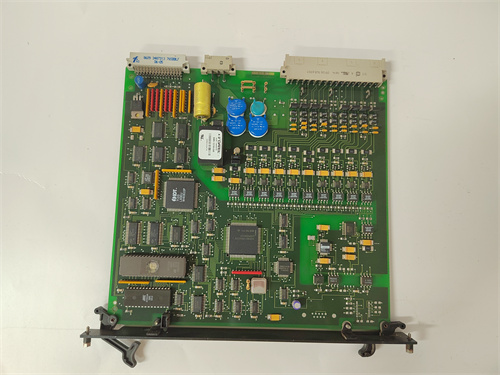


.jpg)
Reviews
There are no reviews yet.