
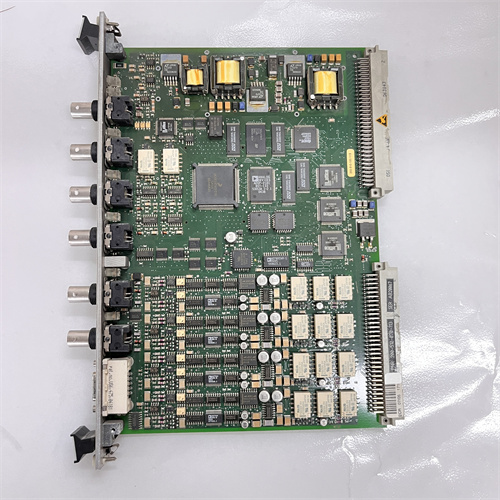
Description
Product Overview and Description
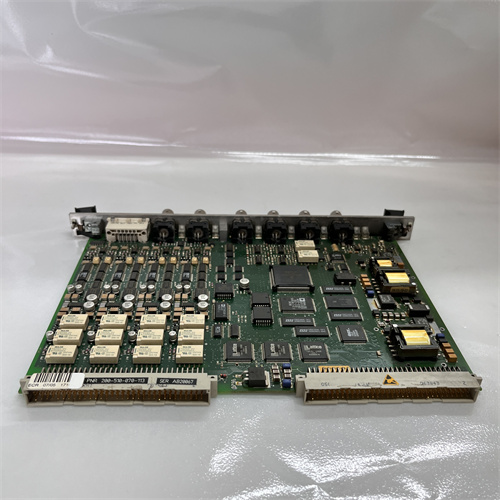
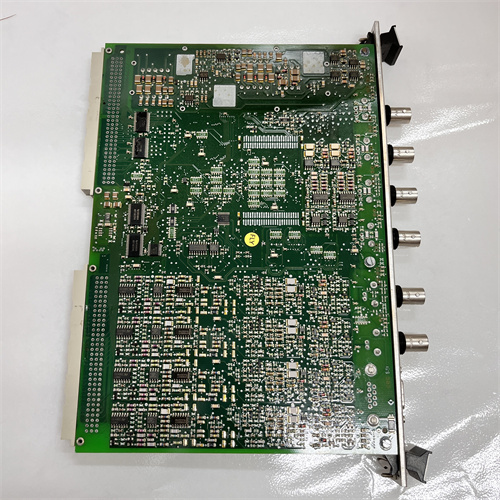
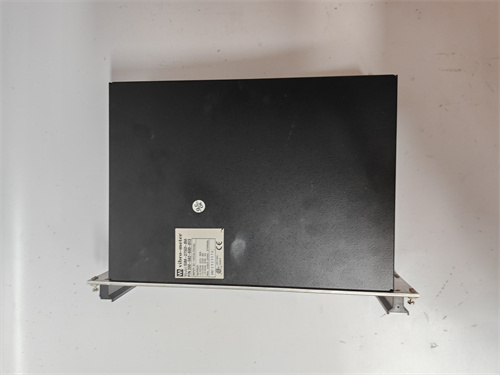
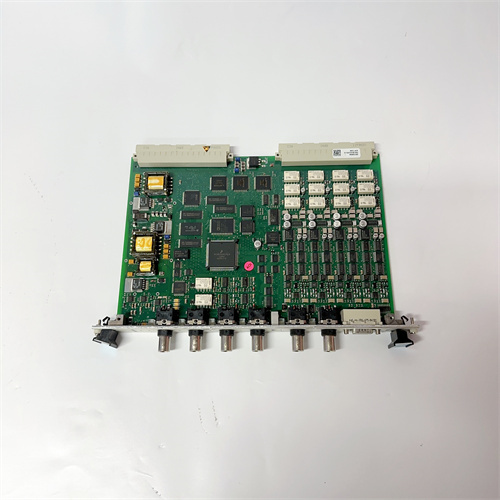
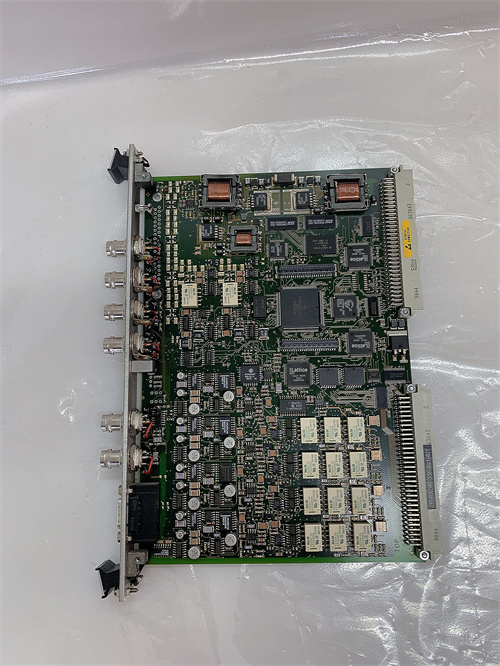
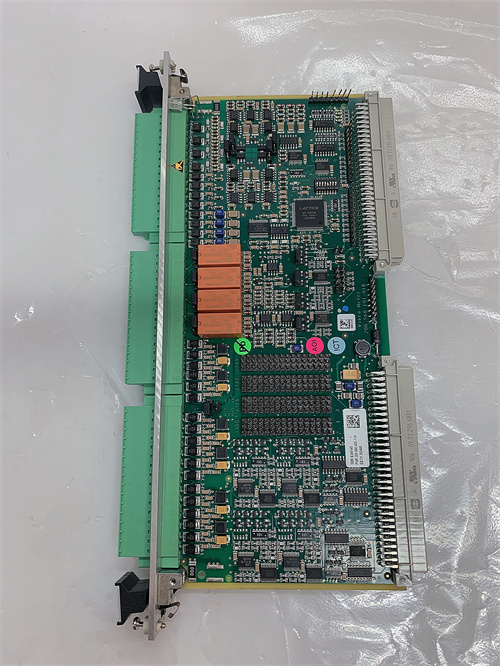
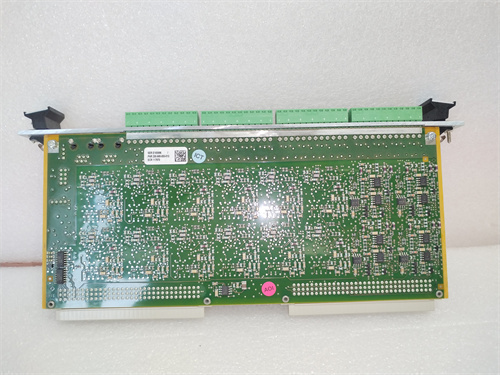
The VIBRO METER VM600 MPC4 PNR200-510-070-113 is a sophisticated and highly specialized module for machinery condition monitoring and protection, not a traditional PLC component, but an integral part of a supervisory control and safety system for critical rotating assets. This unit is a specific configuration of the VIBRO METER VM600 system, which is a leading modular platform for continuous monitoring of vibration, speed, temperature, and other dynamic parameters in turbines, compressors, pumps, and generators. The MPC4 designation indicates it is a Monitoring & Protection Card, a core processing unit that acquires data from sensors, executes protection algorithms, and drives relay outputs. The suffix PNR200-510-070-113 defines its precise hardware and firmware configuration, including input types, relay configurations, and communication options. The primary function of the VIBRO METER VM600 MPC4 is to protect high-value machinery from catastrophic damage by detecting abnormal conditions like excessive vibration, imbalance, misalignment, and bearing wear, and initiating alarms or trips. Integrating this module into a plant’s control architecture provides a vital layer of asset protection that operates in conjunction with, but often independently from, the main process PLC or DCS.
Product Parameters and Specifications
-
Product Type: Machinery Condition Monitoring and Protection System Module
-
Manufacturer Part Number (MPN): VM600 MPC4 PNR200-510-070-113
-
Brand: VIBRO METER (a Meggitt brand, now part of Collins Aerospace)
-
System Platform: VM600 Rack System
-
Module Type: MPC4 (Monitoring & Protection Card – 4 Channels)
-
Configuration Code Breakdown (Typical Interpretation):
-
PNR200: Likely denotes a standard 19-inch rack or a specific front panel/package type.
-
510: Specifies the types of sensor inputs accepted (e.g., seismic velocity transducers, accelerometers, proximity probes for displacement, Keyphasor®).
-
070: Defines the relay output configuration (e.g., number of Form C relays, trip/alert assignments).
-
113: Indicates specific firmware, communication options (e.g., MODBUS, PROFIBUS DP), or power supply variant.
-
-
Key Functions: Vibration monitoring (overall, 1X, 2X rpm), phase measurement, speed measurement, bearing condition (demodulated acceleration), custom analog/digital calculations.
-
Inputs: Typically accepts up to 4 channels of dynamic signals from vibration probes (eddy current), accelerometers, velocity sensors, and tachometer (Keyphasor) inputs.
-
Outputs: Programmable relay outputs for Alert, Danger (Trip), and system status; analog outputs (4-20mA) for key parameters.
-
Communication: Commonly includes serial (RS-232/485) and/or fieldbus (MODBUS, PROFIBUS DP) interfaces for integration with DCS/PLC.
-
Power Supply: Powered from the VM600 rack’s backplane.
Key Advantages and Features
The VIBRO METER VM600 MPC4 PNR200-510-070-113 offers specialized, high-reliability protection that standard PLC analog input cards cannot provide. Its key advantage is the dedicated, processor-intensive analysis of dynamic vibration signals in real-time, performing Fast Fourier Transforms (FFT) and other spectral analyses to detect specific fault patterns. The module features advanced alarm management with dual thresholds (Alert, Danger) and time delays to prevent nuisance trips. Its robust design includes comprehensive self-diagnostics and sensor health monitoring (e.g., probe gap, cable integrity). The configuration flexibility of the VM600 MPC4 allows it to be tailored for specific machine types, from simple pumps to complex multi-bearing steam turbines. Seamless integration into the wider VM600 system allows for centralized display, data logging, and diagnostics via dedicated engineering software. The proven track record of the VIBRO METER platform in critical industries underscores its reliability.
Application Scenarios and Use Cases
This module is essential in industries where unplanned downtime of rotating equipment is prohibitively expensive or dangerous. Its primary application is in power generation, protecting gas, steam, and hydro turbines, as well as critical boiler feed pumps and generator sets. In the oil & gas sector, the VIBRO METER VM600 MPC4 is used on offshore platform gas turbine compressor trains, pipeline centrifugal compressors, and large crude oil pumps. In petrochemical plants, it monitors large reactor feed compressors and cracked gas compressors. For maritime applications, it protects the main propulsion turbines and gearboxes on naval vessels and LNG carriers. Each PNR200-510-070-113 card is typically dedicated to monitoring a single machine train or a specific section (e.g., turbine bearings), providing dedicated, fail-safe protection independent of the general plant control system.
Comparison with Competing Products
The VIBRO METER VM600 MPC4 competes with other high-end machinery protection systems such as the Bently Nevada (Baker Hughes) 3500 series and the Emerson CSI 6500. Compared to simpler vibration transmitters or PLC-based monitoring solutions, the VM600 MPC4 offers a far higher level of signal processing sophistication, diagnostic detail, and certification for safety-related protection (often up to SIL 2). Versus basic vibration switches, it provides continuous, trending data for predictive maintenance. When compared to its direct competitors, the VIBRO METER system is often noted for its strong focus on aerospace-derived reliability, modular flexibility, and its deep integration with turbine control systems. The specific PNR200-510-070-113 configuration is analogous to a fully loaded 4-channel monitor in a competitor’s rack, with its exact feature set defined by the detailed suffix code.
Selection Guidelines and Important Notes
Selection Advice:
-
Machine Criticality Analysis: The VIBRO METER VM600 MPC4 is justified for critical machines where failure consequences are severe. For less critical assets, simpler monitors may suffice.
-
Sensor Compatibility: The PNR200-510-070-113 configuration must match the installed sensor types (e.g., 5V/mm/s velocity, 200mV/g accelerometer, 8mm eddy current probe). Mismatches will lead to incorrect readings.
-
Define Protection Philosophy: Determine the required protection parameters (e.g., overall vibration, shaft displacement, acceleration enveloping) and the relay logic (voting 2-out-of-3, etc.).
-
System Integration Planning: Confirm the communication protocol (MODBUS, PROFIBUS) matches the plant DCS/PLC network. Plan for integration engineering and software configuration.
-
Rack and Power Requirements: The MPC4 card must be installed in a compatible VM600 rack with a properly sized power supply module. Spare slots for future expansion should be considered.
Important Precautions:
-
Safety System Protocols: This is often part of a safety instrumented function (SIF) for machinery protection. Installation, calibration, and modification must follow strict safety lifecycle procedures by qualified personnel.
-
Expert Configuration Required: Setting alarm thresholds, filter bands, and relay logic requires deep knowledge of rotor dynamics and the specific machine. Incorrect settings can cause missed failures or false trips.
-
Calibration and Commissioning: Sensors and the entire monitoring loop (probe, cable, monitor) must be properly calibrated and commissioned using specialized equipment before startup.
-
Regular Functional Testing: The trip functionality must be tested regularly as per the safety plan, often using signal simulators, to ensure the VM600 MPC4 PNR200-510-070-113 will respond correctly to a real fault.
-
Software and Firmware Management: Always use the official VM600 configuration and display software. Back up all configuration files for every card, including the PNR200-510-070-113, as they are essential for replacement.
-
Obsolescence Management: This is a specific configuration of a mature platform. Verify long-term support and availability with the supplier or OEM.
DSPC3001
DSPC172H
DSPC172-2
DSPC172
DSPC171
DSPC170H
DSPC170
Reviews
There are no reviews yet.